


 0161 883 0077










What is anterior knee pain?
Anterior knee pain refers to pain over the front of the patella (kneecap) aggravated by climbing the stairs, prolonged bent-knee sitting, squatting, running and jumping activities.
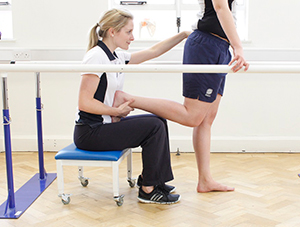
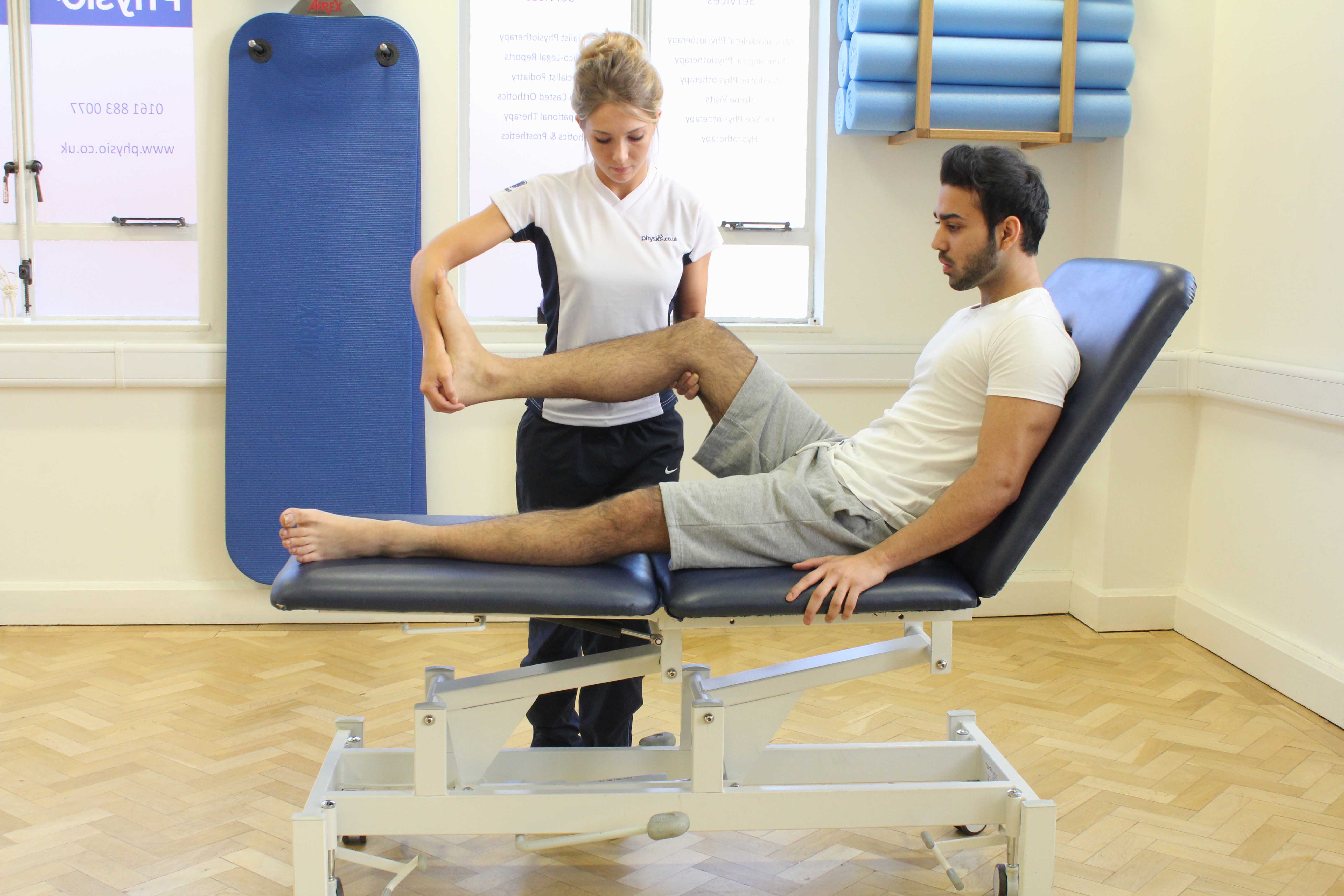 Above: Therapist performing knee assessment
What causes anterior knee pain?
There are many causes of anterior knee pain which may include:
- Strained tendons (tendinitis)
- Poor alignment of the patellofemoral joint
- Softening of the cartilage cartilage that lines the underside of the kneecap (chondromalacia patellae).
- Biomechanical disadvantages such as flat feet
- Tightness or weakness of the muscles on the front (quads)and back (hamstrings) of your thigh
- Repetitive strain
- Inflammation of the bursa inside the knee (bursitis)
What are the symptoms/effects of anterior knee pain?
People with anterior knee pain usually experience an aching pain at the front of the knee and around or under the knee cap that may increase to sharper pain with activity.
Diagnosis of anterior knee pain
Diagnosis of anterior pain can be made by a physiotherapist or doctor who will examine your knee thoroughly.
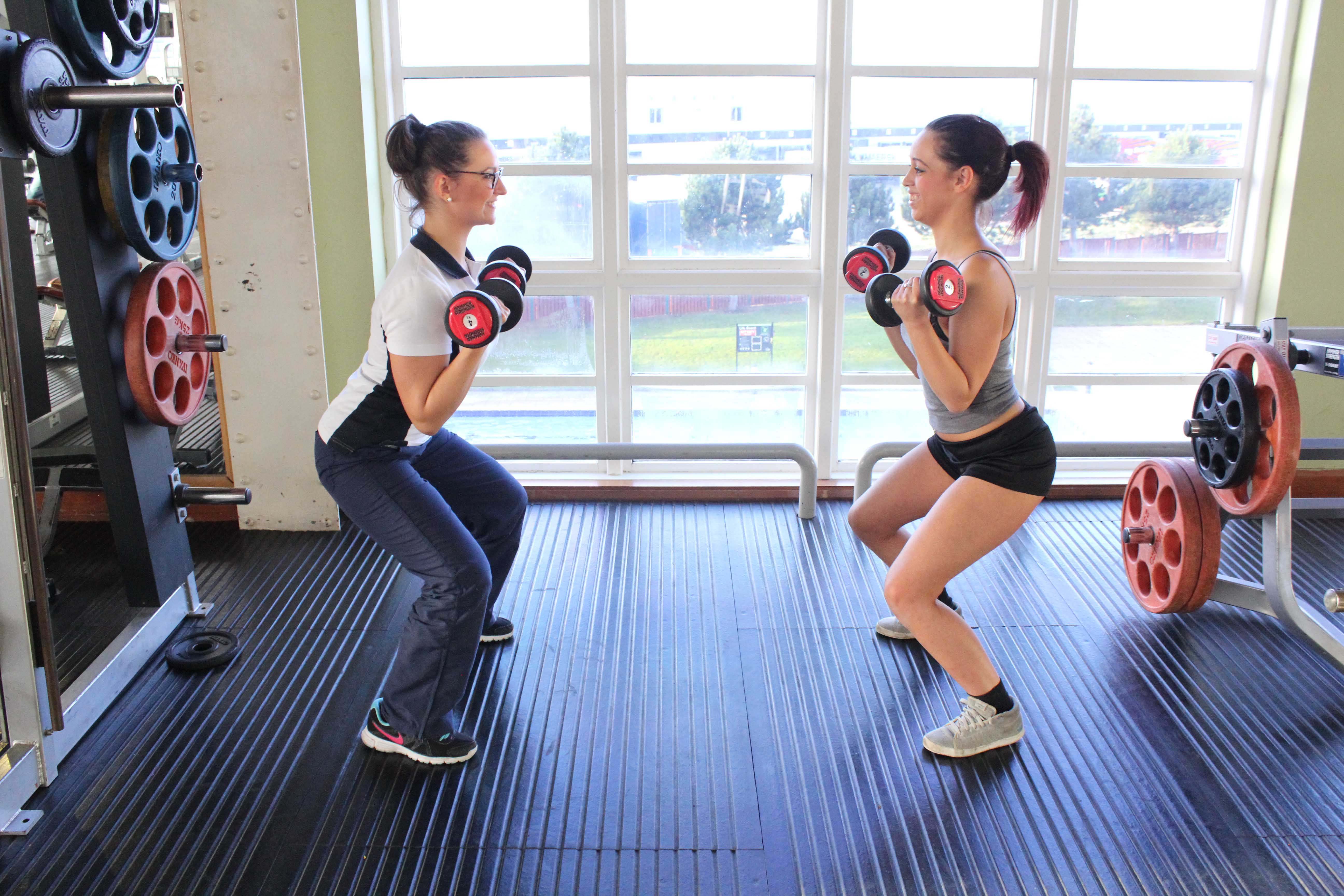 Above: Progressive knee strengthening exercises supervised by therapist
Physiotherapy for anterior knee pain
Our specialised physiotherapist at Manchester Physio will provide accurate assessment and treatment as well as a careful explanation of your condition to ensure an optimal outcome in the short and long term.
Physiotherapy treatment for anterior knee pain will vary according to the exact diagnosis and the underlying causes but may include:
- Stretching exercises for the hamstrings, quadriceps, calf muscles and iliotibial band
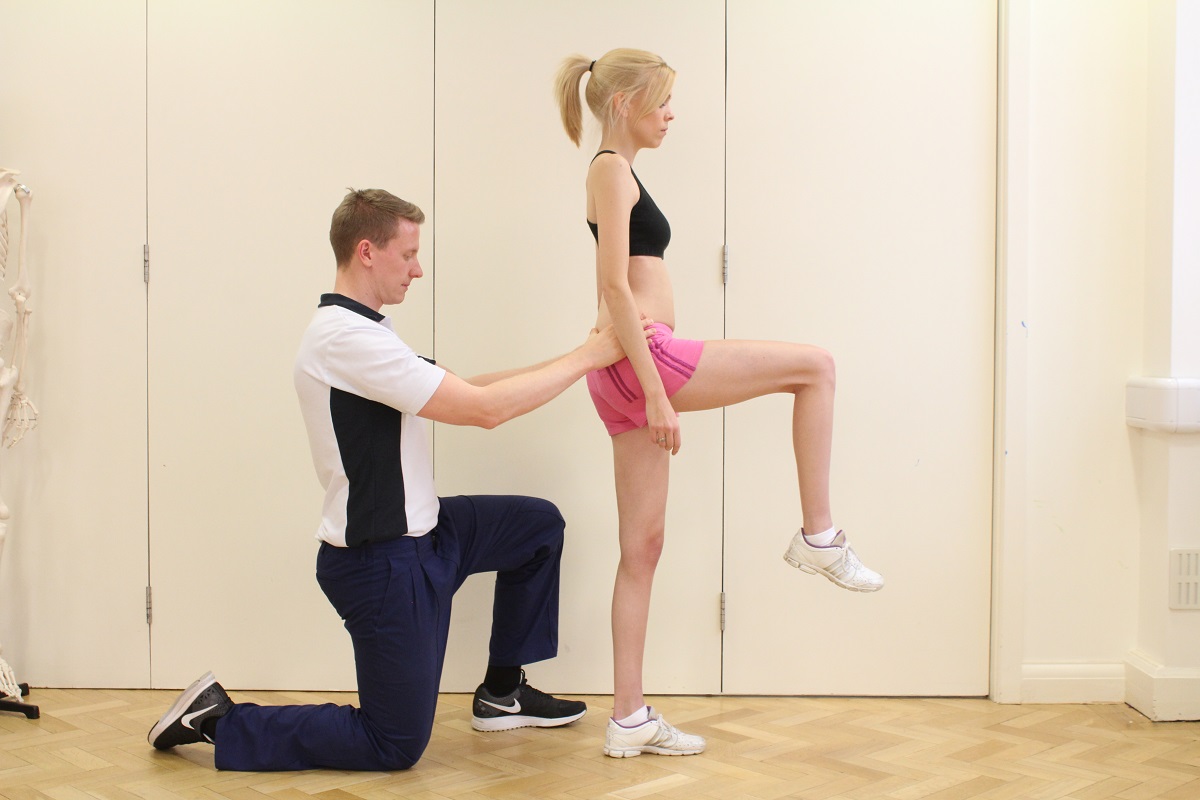
- Strengthening exercises for the quadriceps, hip abductor and hip external rotator muscles
- Patellar taping techniques to correct the position of the patella
- Advice about orthotics
- Patella mobilisation
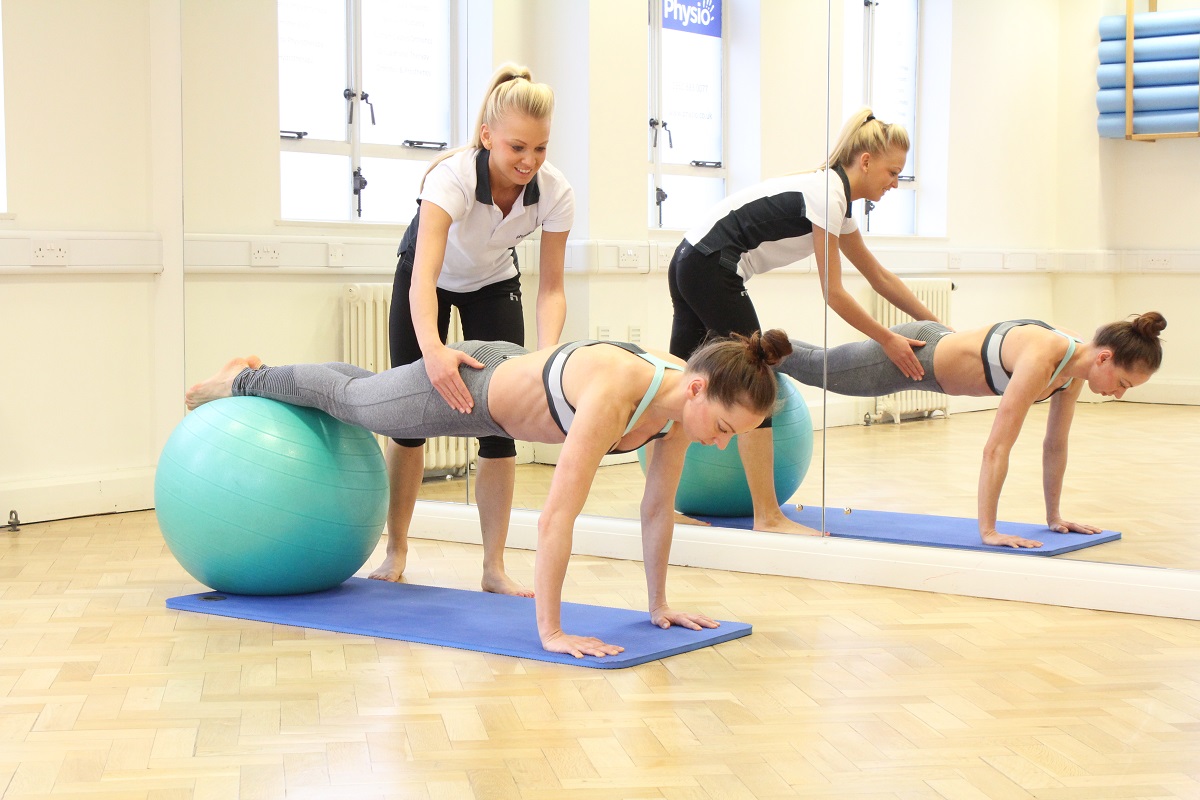
- Core stability exercises
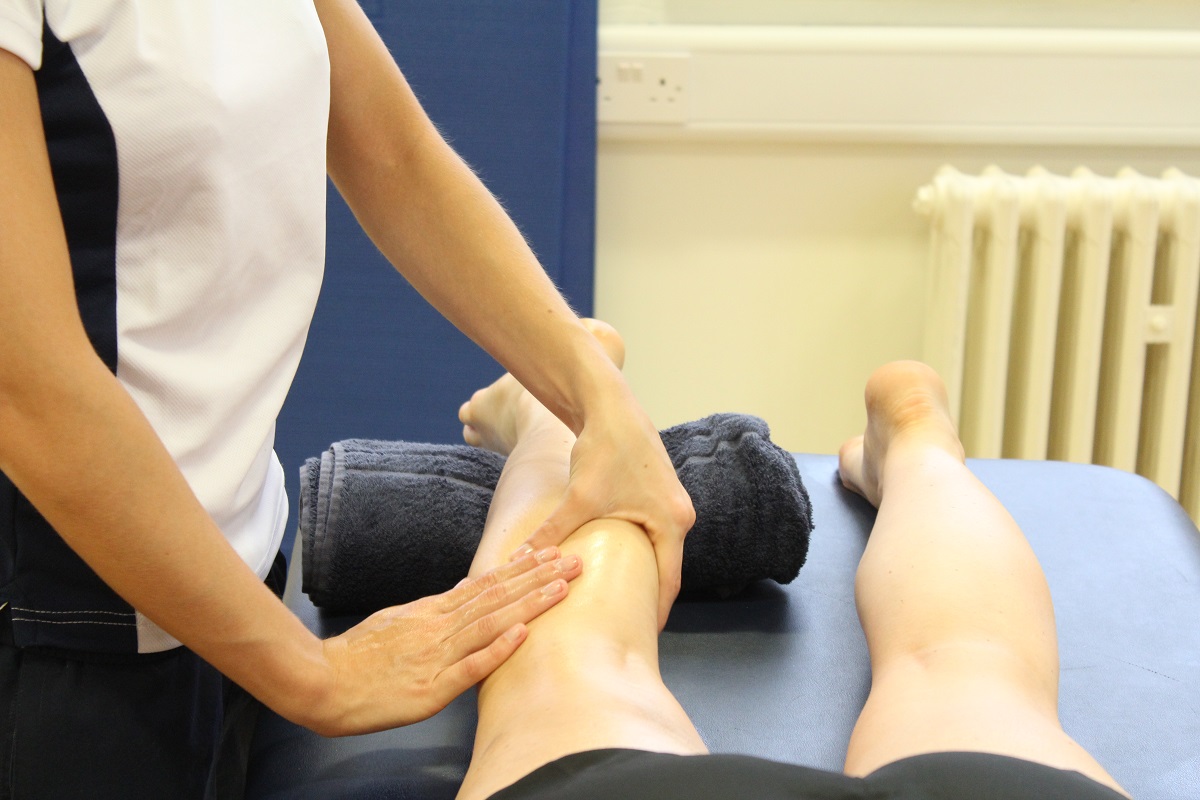
- Soft tissue massage to relieve pain and stiffness
Physiotherapy will reduce pain and stiffness, promote healing and increase muscles strength and flexibility in order to get you back to your normal activities as quickly as possible.
For more information about how physiotherapy can help with knee pain, or to book an assessment please call 0161 883 0077.






 f
f